
Las Vegas runs on a constant flow of visitors, and a huge share of the vehicles moving through the city at any given time are not privately owned commuter cars, they are rental fleet vehicles cycling through McCarran pickups, hotel valet lines, and long airport lot stretches under some of the most intense heat in the country. These vehicles face a genuinely different set of pressures than a typical personally owned car, and understanding why rental and fleet vehicles wear out faster here explains why so many fleet operators have shifted toward on site service to keep their vehicles running.
Why Fleet Vehicles Face A Different Kind Of Wear
A personally owned vehicle typically has one driver with a fairly consistent routine, predictable parking habits, and an owner who notices small changes in how the car behaves over time. A rental vehicle in Las Vegas might have three or four different drivers within a single week, each with different habits, different levels of familiarity with the vehicle, and none of them invested in its long term condition the way an owner would be. This turnover means small issues that a private owner might notice and address early often go unreported until they become significant enough to affect the next renter’s experience.
Combine this driver turnover with the sheer number of miles a typical rental vehicle covers compared to a personal car, since fleet vehicles are rarely sitting idle for long stretches the way a personal vehicle might be, and you get a vehicle accumulating both high mileage and inconsistent care simultaneously, a combination that accelerates wear well beyond what a standard maintenance schedule assumes.
Why Las Vegas Heat Makes This Worse For Fleet Operators Specifically
Extreme heat is hard on any vehicle, but the way fleet vehicles are parked and used in Las Vegas compounds the problem considerably. Airport rental lots and hotel valet areas often mean vehicles sit for extended periods in direct sun on heat absorbing asphalt, sometimes for hours between rentals, which accelerates battery degradation, dries out rubber components, and stresses cooling systems even when the vehicle is not actually being driven.
Batteries in particular take a disproportionate hit in this environment, since heat accelerates the internal chemical breakdown that shortens battery life, and a fleet vehicle that spends significant time parked in full sun between rentals experiences this heat stress on top of the demands of frequent starts by different drivers with different habits. A battery that might last several years in a garaged personal vehicle can reach the end of its usable life considerably faster under this kind of fleet specific heat exposure.
Tires And Air Conditioning Face Concentrated Demand Too
Tire wear in a fleet context reflects the combined driving habits of multiple people rather than one consistent driver, and Las Vegas heat adds tire pressure swings on top of that variability, since air inside a tire expands considerably as both ambient temperature and hot pavement contact combine during a typical desert afternoon. Fleet vehicles that are not checked and adjusted between every single rental can end up running on improperly inflated tires more often than a personally owned vehicle typically would.
Air conditioning performance matters enormously for guest satisfaction in a rental context, and Las Vegas heat means any weakness in a fleet vehicle’s AC system becomes immediately obvious and directly affects the renter’s experience. A refrigerant leak or a struggling compressor that a private owner might tolerate for a while becomes a much more urgent issue for a fleet vehicle that needs to perform reliably for the next guest who picks it up.
Why Downtime Is The Real Cost For Fleet Operators
For a private owner, a vehicle sitting at a repair shop for a day is an inconvenience. For a fleet operator, that same vehicle sitting idle represents lost rental revenue and a gap in available inventory during Las Vegas’s consistently high demand periods. This economic reality is exactly why minimizing downtime matters so much more for fleet vehicles than it does for personal cars, and why a repair approach that requires driving a vehicle across town and waiting in a shop queue is particularly costly for an operator managing dozens or hundreds of vehicles at once.
Scheduling around convention calendars and major events adds another layer of complexity for Las Vegas fleet operators specifically, since demand spikes around large conventions or big weekends mean every available vehicle needs to be rental ready, with little tolerance for a car sitting unavailable at a shop during exactly the stretch when fleet utilization matters most. A repair approach that can flex around these demand cycles, rather than operating on a fixed shop schedule, gives fleet managers considerably more control over when maintenance actually happens.
If your fleet has experienced starting issues that seem tied to extended heat exposure between rentals, our guide on the top 10 reasons your car won’t start and how to get back on the road covers a range of causes relevant to both personal and fleet vehicles operating in this climate.
Why On Site Service Fits Fleet Operations So Well
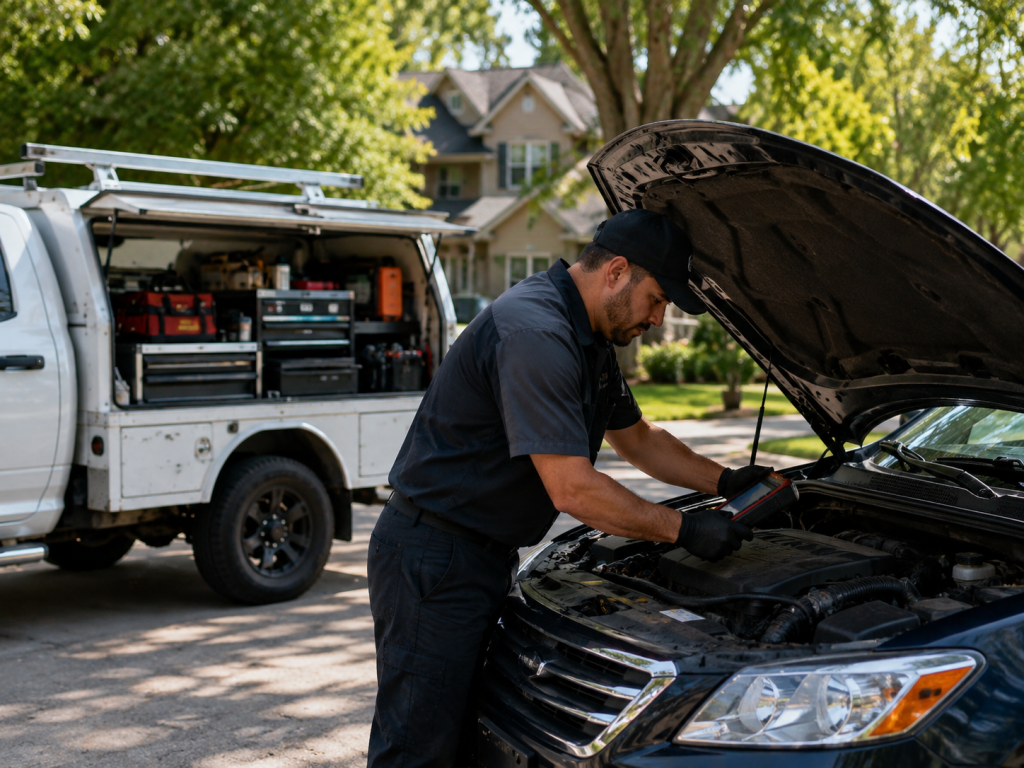
A mobile mechanic who can come directly to a rental lot, hotel valet area, or fleet storage facility eliminates the need to pull a vehicle out of rotation and drive it to a separate shop location, which is precisely the kind of efficiency fleet operators need given how much downtime costs in lost rental availability. Batching multiple vehicle inspections or repairs into a single on site visit also allows fleet managers to address several vehicles at once rather than scheduling separate shop trips for each one individually. This kind of batched service is simply not practical with a traditional shop model, where each vehicle typically needs its own separate appointment and drop off.
We covered common questions about this kind of service in our article on mobile mechanic vs auto shop in Las Vegas, your questions answered, which addresses many of the practical considerations that apply whether you are managing a single personal vehicle or a full fleet operating throughout the Las Vegas Valley.
Keep Your Fleet Ahead Of Las Vegas Heat
Rental and fleet vehicles face a combination of high turnover, inconsistent care, and extreme heat exposure that wears them down faster than a typical personally owned car experiences. Proactive battery testing, tire pressure checks, and air conditioning inspections, scheduled around fleet availability rather than around a shop’s limited hours, are some of the most effective ways to keep vehicles reliable and minimize costly downtime. Building these checks into a regular rotation, rather than waiting for a renter to report a problem, gives fleet managers a much better chance of catching issues before they affect a guest’s experience or take a vehicle out of service unexpectedly.
If your fleet or rental vehicles could use a proactive checkup ahead of Las Vegas’s next heat wave, visit our homepage to learn more about our services, or reach out through our contact us page to schedule on site service wherever your vehicles are located.
Keeping fleet vehicles ahead of Las Vegas heat is one of the most effective ways to protect both vehicle reliability and rental revenue throughout the year.