
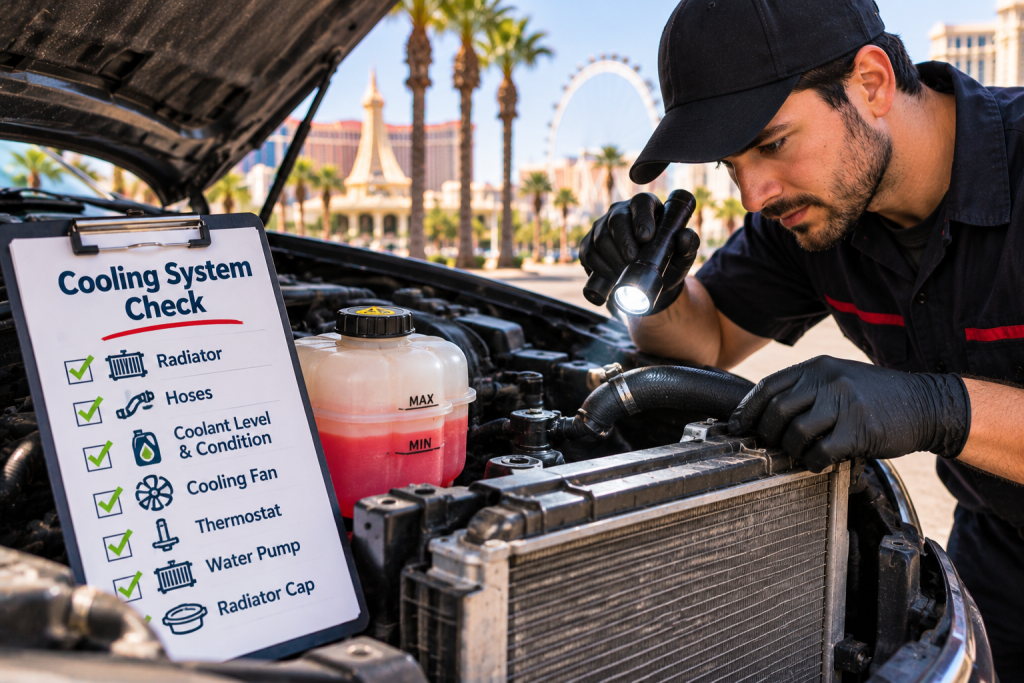
Summer in Las Vegas is a test for every car on the road. Months of intense heat, long drives across the valley and idling in parking lots all put a heavy load on the cooling system. By the time the weather finally eases, the radiator and the hoses connected to it may be carrying wear that you cannot see. Fall is a smart time to check, because small problems found now are easier to deal with than an overheated engine on the next hot day. This guide explains what the radiator does, how desert heat wears it out, which signs to watch for, what to do if the car overheats and what a technician will look at. If you are searching for radiator repair in Las Vegas, here is a plain language overview.
What the Radiator and Cooling System Do
An engine makes a great deal of heat, and it needs a way to get rid of it. The cooling system does that job. Coolant, a mix of antifreeze and water, flows through passages in the engine, picks up heat and travels through hoses to the radiator. The radiator is a set of thin tubes and fins at the front of the car. Air passing over it pulls heat out of the coolant, which then returns to the engine to repeat the cycle. A water pump keeps the coolant moving, a thermostat controls the flow, a fan helps pull air across the radiator when the car is slow or stopped, and a pressurized cap keeps the system at the right pressure.
When any part of this system weakens, the engine can run hotter than it should. Overheating is one of the most damaging things that can happen to an engine, so the cooling system deserves attention.
How Desert Heat Wears Out Radiators and Hoses
Heat is the enemy of nearly every part in the cooling system, and our climate gives it plenty of chances to do damage.
- Rubber hardens and cracks. Hoses are made of rubber, and extreme heat over many months can leave them brittle, swollen or soft. Our guide to why rental and fleet cars struggle in Las Vegas heat shows how cars that work hard in high temperatures wear out faster.
- Coolant ages. The additives that protect metal parts and prevent corrosion are used up over time. Old coolant can become less effective and can leave deposits inside the radiator.
- Pressure builds. A hot system runs under higher pressure, which can reveal weak spots in hoses, seals, the radiator itself and the cap.
- Plastic parts age. Many modern radiators have plastic tanks and fittings that can become brittle with heat and time.
- Dust and debris collect. Dirt, dust and insects can clog the fins at the front of the radiator and reduce airflow.
- Constant demand. Hot days with air conditioning running and stop and go driving ask the system to work close to its limit.
Signs of Radiator and Cooling Problems
- Temperature gauge rising higher than normal, or a warning light for engine temperature.
- Coolant puddles under the car. Coolant is often green, orange or pink and may have a slightly sweet smell.
- Low coolant level in the overflow reservoir that keeps dropping.
- Steam or a sweet smell from under the hood.
- Visible cracks, bulges, soft spots or crusty residue on hoses and around the radiator.
- Rust colored, oily or sludgy coolant.
- Heater not working properly, which can sometimes point to low coolant.
- Frequent topping off. If you keep adding coolant, there is probably a leak.
If Your Car Starts to Overheat
Overheating can happen fast, and how you respond matters.
- Pay attention to the gauge. If it climbs past normal or a warning light comes on, do not ignore it.
- Find a safe place to pull over and turn off the engine as soon as you can.
- Do not open the hood right away if steam is coming out, and never open the radiator or coolant cap while the engine is hot. The system is under pressure and hot coolant can cause serious burns.
- Let the engine cool completely before checking anything.
- Do not keep driving an overheated engine. It can lead to serious damage. Call for help instead.
Your owner’s manual explains the warning lights and what to do for your vehicle.
Common Radiator and Cooling Parts That Fail
- Radiator leaks. Corrosion, age or damage can cause leaks in the core, tanks or seams.
- Hoses. Cracked or swollen hoses can burst or leak, especially when the engine is hot.
- Radiator cap. A cap that no longer holds pressure can let coolant escape.
- Thermostat. A stuck thermostat can cause overheating or poor temperature control.
- Water pump. A failing pump can leak or stop circulating coolant.
- Cooling fan. If the fan does not turn on, temperatures can climb at low speeds and in traffic.
- Clogged radiator. Deposits inside or debris outside can reduce cooling.
The Link Between the Radiator and Your Air Conditioning
The AC condenser sits near the radiator at the front of many cars, and the two share airflow. A radiator or fan problem can affect how well the AC cools, and a weak AC can be one more clue that airflow at the front of the car is not what it should be. If your air conditioning is struggling, read our guide on common causes when a car AC is not working.
What a Technician Checks
- A visual inspection of hoses, clamps, the radiator and the area around the water pump for leaks and damage.
- A pressure test of the cooling system, which can reveal slow leaks.
- A look at the coolant, including its level, condition and type.
- A check of the cap, thermostat and fan.
- A test drive or temperature check to see how the car behaves.
Based on what is found, the technician may recommend replacing a hose, the cap or the thermostat, flushing old coolant, repairing or replacing the radiator or other work. Follow your owner’s manual for coolant type and service intervals, and ask the technician to explain what is needed now and what can wait.
Radiator Repair or Replacement?
Not every radiator problem means a new radiator. A loose clamp, a worn hose or a bad cap may be the whole story. Other times, corrosion or damage to the core means replacement is the better route. A technician can explain which applies, and it is a good idea to find the root cause of any leak rather than just adding coolant over and over.
Prevention Tips for the Desert
- Check the coolant level in the reservoir regularly, with the engine cool.
- Inspect the hoses for cracks, bulges and soft spots.
- Follow the coolant service schedule in your owner’s manual.
- Use the right coolant. Different cars need different types, and mixing the wrong ones can cause problems.
- Keep the front of the car clean, and have debris removed from the radiator fins.
- Watch the temperature gauge and act early if it climbs.
- Fix small leaks promptly.
- Carry water or help information when driving long distances in the heat.
How a Mobile Mechanic Can Help
Dealing with a cooling problem is stressful, especially in the heat. A mobile mechanic can come to your home or workplace in Las Vegas, check the cooling system, look for leaks, inspect hoses and talk through the options. Many cooling system jobs, such as replacing a hose, a thermostat or a cap, can be done on site. A larger job, such as replacing a radiator on a tightly packed engine bay or fixing damage from an engine that has already overheated, may take more time or need a shop. A good technician will be upfront about what can be done where you are.
Quick Summary
- Desert heat wears out radiators, hoses, caps and coolant.
- Look for leaks, a rising temperature gauge, sweet smells and low coolant.
- Never open a hot radiator cap, and do not keep driving an overheating car.
- Fall is a good time for a cooling system check before the next hot season.
- Some repairs can be done at your home, and others may need a shop.
A cooling system check is much easier than recovering from an overheated engine. If you would like help, visit the Mobile Mechanic Pros of Las Vegas homepage to learn more, or contact us to schedule a visit.